Sanity
Why Next.js and Sanity Are a Powerful Choice for SEO-Friendly Business Websites
Learn why Next.js, Sanity CMS, and Vercel are a strong stack for building fast, scalable, SEO-friendly business websites that are easy to manage and ready for growth.
Introduction
A business website should not only look good. It should load fast, rank well, be easy to update, and convert visitors into real leads.
That is why a modern stack like Next.js, Sanity CMS, and Vercel is a strong choice for business websites, SaaS websites, portfolios, landing pages, and content-driven platforms.
This stack gives businesses the flexibility of a custom-coded website while still allowing non-technical teams to manage content easily through a clean CMS.
In this article, I will explain why Next.js and Sanity are a powerful combination for building SEO-friendly websites and how this setup can help businesses grow online.
What Is Next.js?
Next.js is a modern React framework used to build fast, scalable, and SEO-friendly websites.
It supports features like server-side rendering, static generation, image optimization, metadata handling, API routes, and performance-focused deployment.
For business websites, this means pages can load quickly, content can be structured properly, and search engines can understand the website more easily.
Next.js is commonly used for business websites, SaaS platforms, agency websites, portfolio websites, blogs, landing pages, and custom web applications.
What Is Sanity CMS?
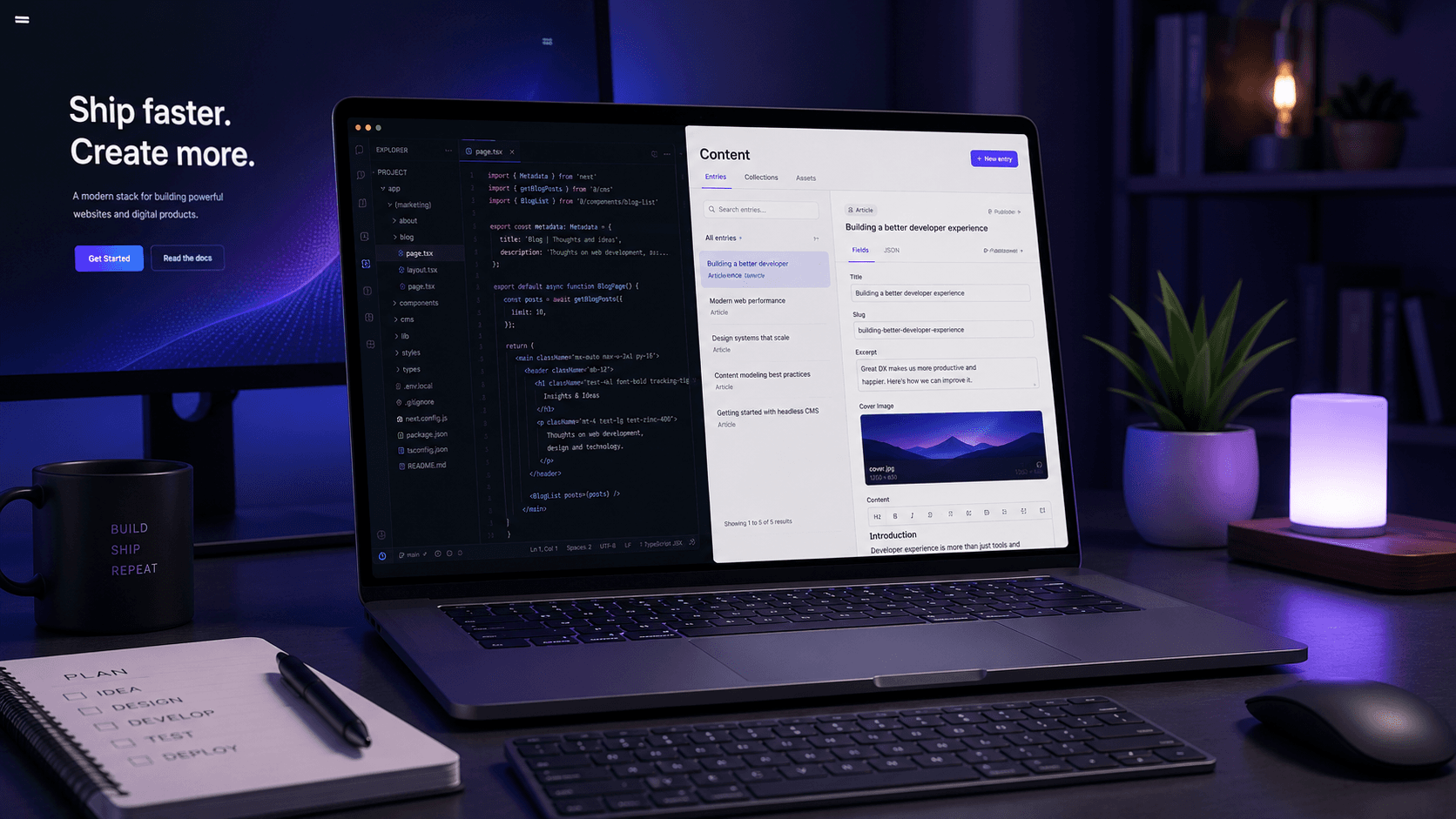
Sanity is a headless CMS that allows website content to be managed separately from the frontend code.
Instead of editing code every time you want to publish a blog, update a service page, change pricing, or add a case study, Sanity gives you a custom content dashboard.
With Sanity, businesses can manage blog posts, services, portfolio projects, case studies, FAQs, authors, categories, SEO titles, descriptions, images, and reusable content sections.
This makes the website easier to manage and more scalable for long-term growth.
Why Next.js and Sanity Work Well Together
Next.js handles the frontend experience. Sanity handles the content.
Together, they create a clean separation between design, development, and content management.
This is useful because most businesses need two things at the same time: a fast, custom, premium frontend and a simple CMS for managing content without developer help.
With this setup, developers can build a polished website while editors and business owners can update content directly from Sanity Studio.
This makes the website easier to maintain compared to hardcoded pages or slow page builders.
SEO Benefits of Next.js and Sanity
SEO is one of the biggest reasons businesses choose this stack.
A properly built Next.js and Sanity website can include custom SEO titles, meta descriptions, canonical URLs, Open Graph images, Twitter card metadata, structured data, clean URL slugs, optimized images, sitemap support, and internal linking.
This gives every important page a better foundation for search visibility.
Of course, no technology can guarantee top rankings by itself. SEO also depends on content quality, keyword research, backlinks, user experience, competition, and consistency.
But a strong technical foundation makes it much easier to compete.
Why Website Speed Matters
Visitors do not like slow websites. If a page takes too long to load, users often leave before reading the content or contacting the business.
Next.js helps improve performance through optimized rendering, image handling, caching, and deployment workflows.
When deployed on Vercel, a Next.js website can also benefit from global infrastructure, fast builds, and smooth publishing workflows.
For businesses, better speed can support lower bounce rate, better user experience, more leads, better engagement, and stronger SEO performance.
Why Content Management Matters
Many businesses start with a static website and later realize they need to update it frequently.
They want to add blog posts, update services, publish case studies, change homepage sections, add FAQs, and improve SEO content.
If every small update requires a developer, the website becomes slow to manage.
Sanity solves this problem by giving businesses a flexible CMS where content can be updated without touching the code.
For example, a business owner or marketing team can publish a new blog post directly from Sanity. Once published, the website can automatically update through a revalidation workflow.
This creates a smoother publishing process.
Ideal Use Cases for Next.js and Sanity
Next.js and Sanity are especially useful for businesses that care about performance, SEO, and long-term scalability.
This stack is a good choice for B2B SaaS websites, personal portfolio websites, marketing websites, SEO blogs, agency websites, startup websites, product landing pages, construction websites, healthcare marketing websites, service business websites, developer portfolios, and multi-language content websites.
If your website needs custom design, structured content, and better SEO control, Next.js and Sanity are a strong option.
How I Build SEO-Friendly Websites with This Stack
When I build a website with Next.js and Sanity, I focus on both technical quality and business goals.
My process usually starts with planning the page structure, creating clean content models in Sanity, and building responsive frontend components in Next.js.
After that, I add SEO metadata fields, reusable blog templates, optimized images, schema markup, sitemap support, and Sanity webhook revalidation.
The goal is not just to create a good-looking website. The goal is to build a website that can grow with the business.
Why Custom Development Is Better Than Generic Templates
Templates can be useful for quick launches, but they often create limitations later.
A custom Next.js and Sanity website gives more control over design quality, performance, SEO structure, content fields, page layout, animations, reusable sections, scalability, and future integrations.
This is especially important for businesses that want a premium online presence instead of a generic website that looks like everyone else.
Common Features I Can Build
A modern business website can include much more than a homepage and contact form.
With Next.js and Sanity, I can build editable blog systems, case study pages, portfolio sections, service pages, dynamic landing pages, SEO metadata managers, FAQ sections, testimonials, author profiles, category pages, tag pages, newsletter sections, contact forms, analytics integration, CRM integration, and multi-language content.
These features help turn a simple website into a complete marketing platform.
Final Thoughts
Next.js and Sanity are a powerful combination for businesses that want a website that is fast, flexible, SEO-friendly, and easy to manage.
Next.js provides the performance and frontend flexibility. Sanity provides the structured content management system.
Together, they create a website setup that works well for both developers and content teams.
If you are planning to build or redesign a business website, portfolio, SaaS website, or SEO-focused blog, this stack is a strong choice for long-term growth.
A good website should not only look premium. It should also be fast, easy to update, technically clean, and ready to attract the right visitors from search engines.